Showing posts with label localization. Show all posts

Wednesday, April 10, 2013

Localization: Sora in Kingdom Hearts (later Hallow Bastion visit)

So, bowing in the Japanese Culture has a lot of meaning.  The angle, how long you do it, the rank of the person, it all denotes different things.

Actually, Sony got into trouble after the PSN Hacking scandal because they did not bow for a full minute. ((And I can't find that now.  Here, have some info on bowing: it's a good primer))

Okay, now that that is out of the way... this should give you some idea on Sora's bow.

While English has "Grovel like a dog" or somewhat similar in our vocabulary, it does not do justice to this scene.  Due to the length and the position of him being on his hands and knees, Sora is putting himself so below Saix  he has effectively declared Saix to be his master.  He has (Possibly figuratively) Given up his freedom to be with Kairi. 

That has no English connotation.


Wednesday, March 27, 2013

Game Design: Localizing Pokemon Names

Pokemon, much like Phoenix Wright, has so many double meanings that translation to get the idea across can be difficult.

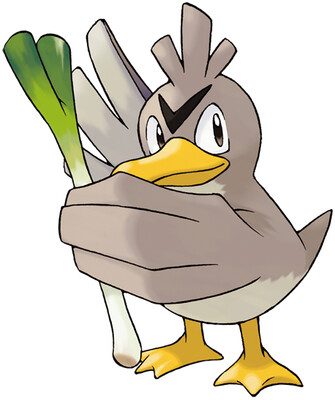
 Take, for example, Farfetch'd.  Farfetch'd (in English)  refers to something being "Far fetched"  which, according to Webster's, means " not likely to be true or to occur"  The Japanese version means (Literally) "a duck comes bearing green onions'" which is a reference back to a Japanese proverb which means both "Something surprising but convenient" and also means something along the lines of something which is good now, but you traded it for something else which would be better long term. (You trade either Spearow of Pidgey for Fearow.  Both are weak now but evolve into powerful flying later) 

Other examples are Ampharos:
Which refers both to an Amp (A measure of electricity, perfect for an electric sheep) and the Pharos lighthouse in Alexandria.  (and remember where you find an Ampharos in the game?  Yep, at a lighthouse.)

and Empoleon:
Which manages to refer to Emperor Penguins, The North Pole, and Napoleon at the same time. 


Okay, okay, some of them are rather basic (Gears, anyone?)  and others are... guesswork.  (Such as Lairon, Iron maybe, but where did the La come from?)  but there are over 500 pokemon and any amount of digging will turn up a high amount of references, clever translation, and more depth than you would think.  My hat is off to the Localization team.  They make it work. 


Friday, January 6, 2012

Localization

I'm going to talk about localization in general today. 

Localization is the second part of translation that turns a good translated script into a great one.  When you translate, you first translate something literally.  "The vodka is good but the meat is rotten" is a well known example of a literal translation of "The spirit is willing but the flesh is weak".  What localization does is smooth the words over to give accurate translations.   Almost every word we use has an alternate and more specific meaning, or what about context?  "Steal" vs "lift" mean the same thing, but have very different contexts. 

This is where localization comes into play.  They look at the word, it's context, and make sure that they have the best word that fits the scenario.  Check some examples out here.

Other problems of localization include slang or references to local events.  "Spastic" means excited in the US, but it's horribly insulting elsewhere.  Meanwhile, the Ace Attorney games have "Lotta Heart" who speaks in a particular Japanese dialect.  The implications of that dialect wouldn't transfer over to the US, so they made her southern instead.
Localization is what makes games more enjoyable.  "YOU SPOONY BARD!" was put in because English lacked a current word that expressed what the Japanese said.  It's now an iconic line.  (For the record, the literal translation is somewhere along the lines of 'you lovesick bastard')   Maya's noodles were replaced by hamburgers, Final Fantasy VI's heroine is called either "Tina" or "Terra"  (the point was to make it sound exotic to the player's ears. "Tina" isn't exotic in the west)  and Pokemon's names are often changed to get the pun or idea across. 

Literal isn't always better.  There are some things readers just won't get, either due to cultural differences, language subtleties, or a mix of the too.  Some things that okay in one language or culture  are very insulting in another.  Localization sees these problems and fixes them.